
The Thermal Bottleneck of the Digital Economy
Beyond traditional structural framing, the 6000 series aluminum family has quietly become one of the most critical materials safeguarding modern digital infrastructure. Today, nowhere is the battle against heat more intense—or more commercially consequential—than inside the modern data center.
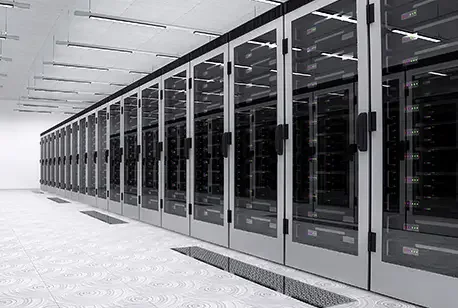
Driven by the exponential expansion of cloud computing, enterprise digitization, and high-density artificial intelligence (AI) and machine learning clusters, the data center sector is confronting an unprecedented thermal bottleneck. Where legacy enterprise server racks once operated at 5 to 10 kilowatts per cabinet, modern high-performance computing (HPC) and AI deployments routinely deliver 40, 60, and even over 100 kilowatts in a single rack. Every watt of electrical power consumed by a server processor, GPU, network switch, or power supply unit is ultimately converted into concentrated thermal energy.
For thermal engineers, hardware OEMs, and data center infrastructure builders, heat dissipation is the primary ceiling limiting compute density and facility uptime. At the front line of this thermal defense are alloy 6063 and the broader 6xxx-series aluminum family. Combining high thermal conductivity, low weight, corrosion resistance, and extraordinary extrudability, the 6000 series is the premier material for high-performance aluminum heat-sink extrusion arrays and specialized data-center cooling infrastructure.
The Critical Role of Aluminum Heat Sink Extrusion in Data Centers
In a mission-critical hyperscale or colocation server environment, thermal management is not about occupant comfort—it is about hardware survival. While extruded heat sinks are used across many industrial sectors, aluminum heat sink extrusion profiles are primarily used at scale in data centers to protect sensitive servers, high-speed telecommunications equipment, and uninterruptible power distribution systems from catastrophic overheating.
When a high-TDP CPU, GPU, optical transceiver, or power rectifier experiences a spike in junction temperature, the consequences are immediate: thermal throttling degrades compute performance, fan speeds surge (driving up Power Usage Effectiveness, or PUE, penalties), and sustained overheating leads to solder-joint fatigue, silicon degradation, and costly unplanned downtime.
Aluminum heat sink extrusion components act as high-capacity thermal bridges at the component and chassis level:
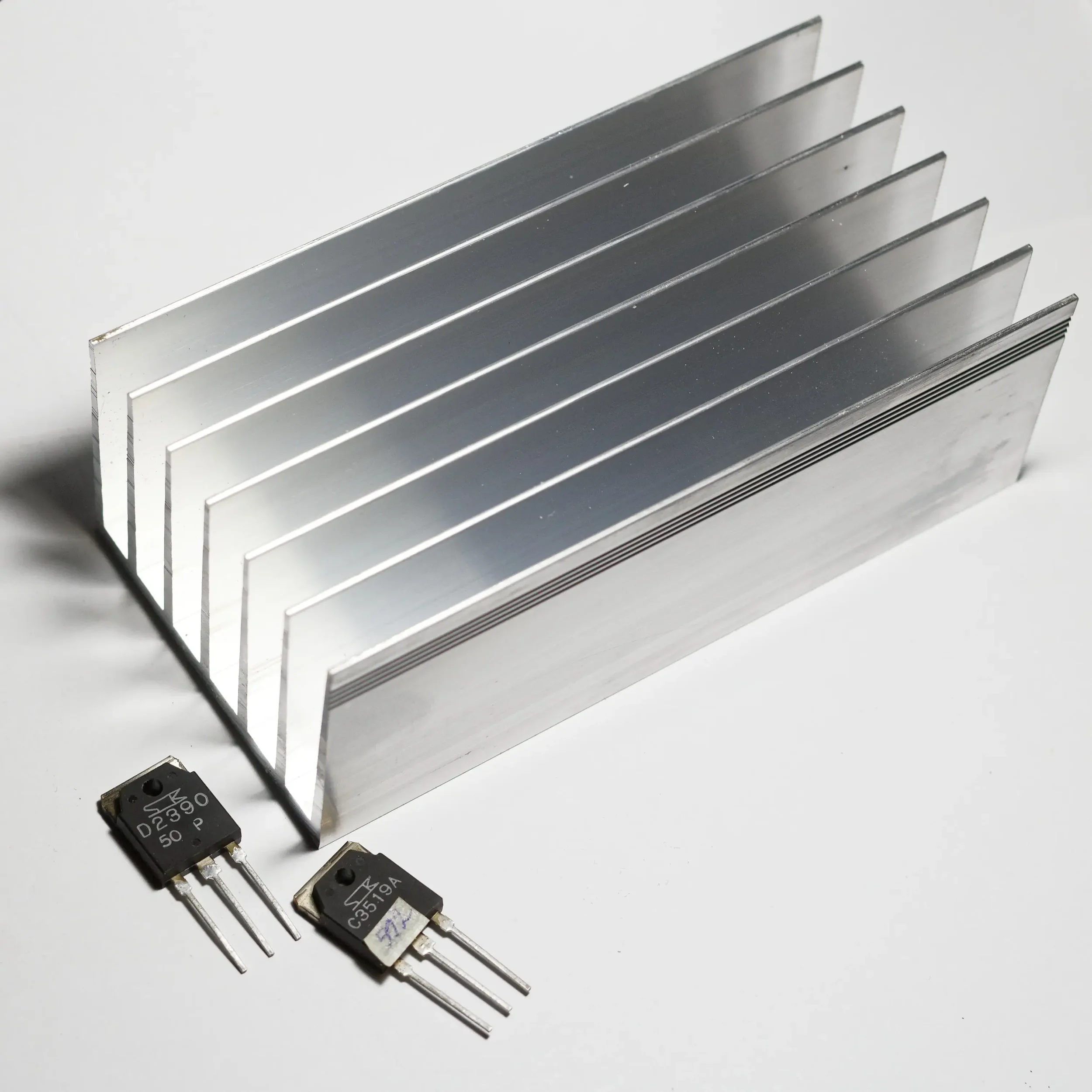
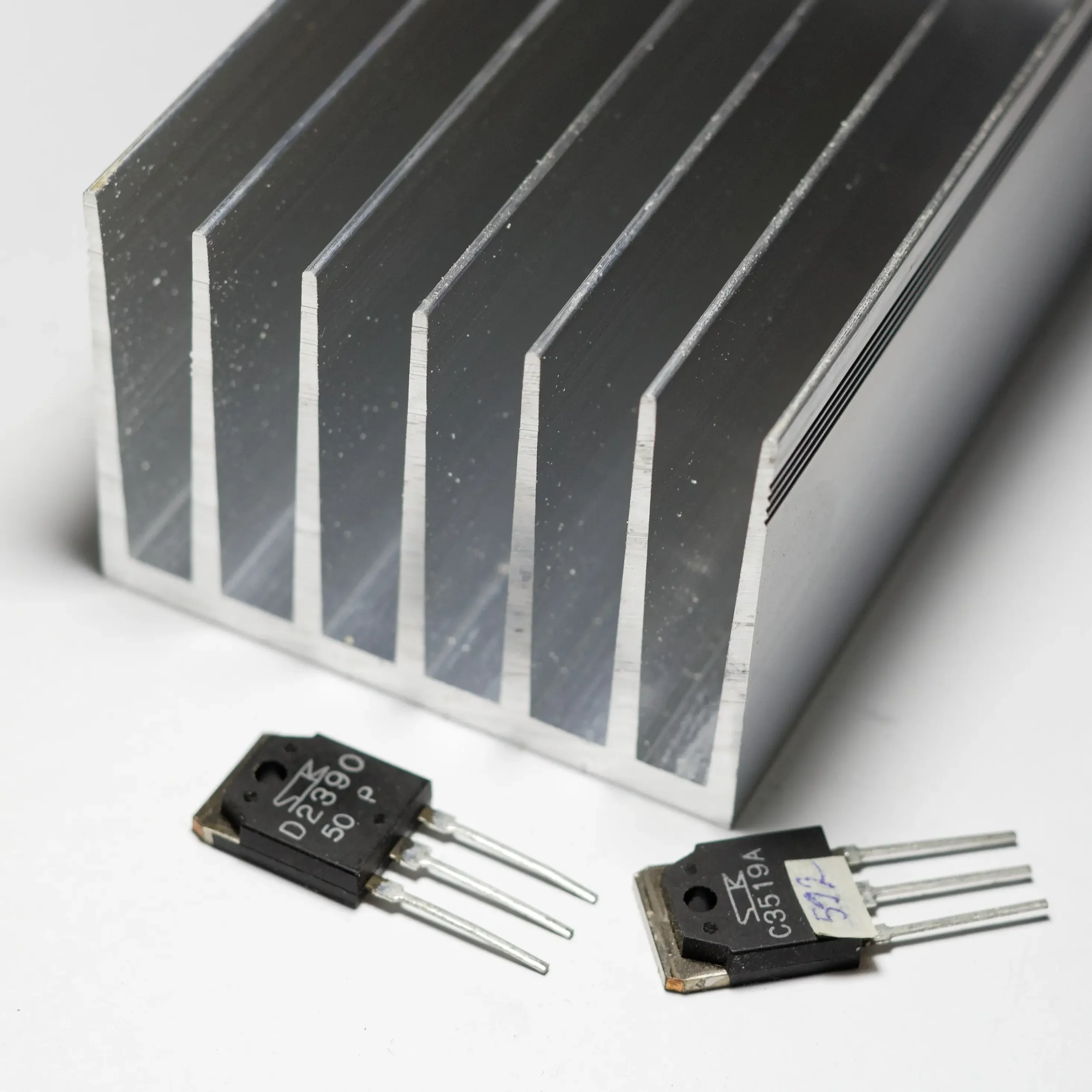
Rapid Conduction and Convection: Alloy 6063 provides an exceptional balance of mechanical strength and thermal conductivity—roughly 200 to 218 depending on temper (engineers should verify exact temper values such as 6063-T5 or 6061-T6 against primary Aluminum Association standards for specific thermal simulations). The dense extruded baseplate rapidly conducts thermal energy away from the thermal interface material (TIM) mounted on the chip or power module, while an array of thin, closely spaced vertical fins multiplies the surface area exposed to forced-air chassis fans.
Monolithic Metallurgical Integrity: Because an extruded heat sink is formed from a single solid billet of 6063 aluminum, there are no brazed joints, solder layers, or mechanical press-fits between the baseplate and the fins. Heat flows uninterrupted from the mounting surface to the fin tips with zero internal thermal contact resistance.
Chassis Weight and Structural Balance: Server blades, telecom rectifiers, and rack-mounted Uninterruptible Power Supplies (UPS) operate under strict weight and spatial constraints. Compared to copper—which is roughly three times heavier and significantly more expensive to raw-source and machine—extruded 6063 aluminum delivers maximum thermal dissipation per gram, preventing circuit boards (PCBs) and server rack rails from suffering mechanical deflection.
Why Alloy 6063 Dominates Complex Thermal Geometries
When thermal engineers model a heat sink in Computational Fluid Dynamics (CFD) software, the goal is almost always the same: pack as much fin surface area as possible into a constrained volumetric envelope while calibrating to the cooling fans' static pressure. Achieving this in production requires an alloy capable of being pushed to geometric extremes.
While 6061 is often selected for heavy structural load-bearing frames, alloy 6063 is universally recognized by metallurgists as the premier alloy for intricate thermal extrusions. Because of its specific magnesium-silicon balance, 6063 exhibits significantly lower flow stress at extrusion temperatures. This allows the metal to flow smoothly through complex, tight-tolerance die bearings without tearing, cracking, or surface chatter.
As a result, 6063 enables manufacturers to achieve:
High Tongue Ratios: The "tongue ratio" defines the depth of the channel between two heat sink fins relative to the width of the gap between them. Alloy 6063 supports high-aspect-ratio, tightly pitched fins that dramatically expand convective surface area.
Ultra-Thin Fin Walls: Extruding thinner fins reduces component weight and widens airflow channels, reducing the air-side pressure drop across the server blade.
Superior Surface Finish: 6063 extrudes with a smooth, uniform surface finish that minimizes aerodynamic skin friction and provides an ideal substrate for functional anodizing.
Custom Aluminum Extrusion Applications: From Chip to Facility
What makes extruded aluminum uniquely valuable to the data center ecosystem is how custom aluminum extrusion applications empower engineers to solve highly specific thermal challenges across the entire facility—connecting micro-level chip cooling to macro-level aluminum extrusion HVAC and air handling infrastructure.
When standard catalog profiles cannot handle the heat flux of next-generation hardware, custom extrusion tooling unlocks specialized thermal solutions:
Cross-Cut Pin-Fin Extrusions: By taking a linear aluminum heat sink extrusion and executing secondary CNC cross-cutting perpendicular to the extrusion axis, manufacturers create dense pin-fin arrays. Pin-fin heat sinks excel in turbulent, omnidirectional airflow environments inside densely packed server and telecom enclosures where airflow direction is unpredictable.
Serrated and Fluted Fin Profiles: Custom extrusion dies can incorporate fine serrations, micro-grooves, or flutes along the vertical faces of individual heat sink fins. These features increase the effective surface area by 15% to 25% and disrupt laminar boundary layers without increasing the heat sink's external footprint.
Power Distribution and Busbar Cooling: Data centers require massive electrical infrastructure, including switchgear, transformers, inverter modules, and high-amperage busbars. Custom extruded heat sink housings and conductive 6xxx series profiles keep power distribution units (PDUs) and battery backup systems within safe operating temperatures under continuous peak loads.
Hybrid Liquid-Cooling Cold Plates & Manifolds: As AI data centers increasingly transition toward direct-to-chip liquid cooling and rear-door heat exchangers, custom 6000 series extrusions are engineered with integrated internal fluid micro-channels, manifolds, and external cooling fins—bridging the gap between air and liquid thermal loops.
Integration with Facility Air Handling: Thermal management doesn't stop at the server chassis. The heat rejected by server heat sinks into the hot aisle must be exhausted by the building's macro cooling envelope. Custom 6000 series extrusions form the rigid hot-aisle/cold-aisle containment framing, ceiling plenums, and precision Computer Room Air Handler (CRAH) dampers and louvers that keep conditioned air strictly separated from exhaust heat.
The Metra North America Advantage for Data Center OEMs
In the data center supply chain, engineering an optimal thermal profile is only half the battle. Hardware OEMs and mission-critical facility contractors need a domestic manufacturing partner capable of holding microscopic tolerances at hyperscale volume.
At Metra North America, we have built our extrusion, fabrication, and finishing capabilities to meet the exacting standards of the data center and industrial cooling sectors:
High-Tolerance Thermal Extrusion Expertise: Producing a heavy structural I-beam and producing a high-fin-density aluminum heat sink extrusion require completely different tooling and process controls. If die cooling, ram speed, and billet metallurgy are not managed with precision, high-aspect-ratio fins can deflect and baseplates can lose flatness. Metra's tooling engineers maintain strict dimensional and flatness controls so your thermal interface surfaces mate cleanly with sensitive electronics.
Hyperscale Volume and Domestic Speed: Data center construction timelines and server refresh cycles move at breakneck speed. Relying on overseas extrusion supply chains exposes OEMs to tariff volatility, maritime delays, and inconsistent quality. Metra North America's domestic press network provides the scalable capacity, consistent alloy chemistry, and reliable lead times required by major U.S. technology and industrial equipment manufacturers.
Vertically Integrated CNC Machining and Finishing: A raw heat sink extrusion still requires secondary processing before it can be mounted to a circuit board or power assembly. Metra eliminates multi-vendor supply chain bloat by executing precision sawing, CNC fly-cutting (for ultra-flat mounting pads), cross-cutting, drilling, tapping, and deburring entirely in-house. Furthermore, our in-house anodizing lines apply clear or black anodized finishes that protect against corrosion, provide electrical insulation, and significantly boost radiative heat transfer in low-airflow environments.
Scaling Thermal Performance with Metra
As compute power continues to accelerate, the ability to capture, conduct, and dissipate heat efficiently will define the winners in data center hardware and infrastructure design. The versatility of alloy 6063 and the 6000 series family empowers thermal engineers to deploy everything from high-aspect-ratio aluminum heat sink extrusion arrays on sensitive server processors to the structural containment and aluminum extrusion HVAC systems managing the data hall.
Turning those designs into reality requires a vertically integrated manufacturing partner built for precision and scale. At Metra North America, we deliver the domestic extrusion capacity, tight-tolerance CNC fabrication, and specialized finishing that keep the digital economy running cool under pressure.
See Metra's full range of industrial extrusion capabilities.